
Loading...
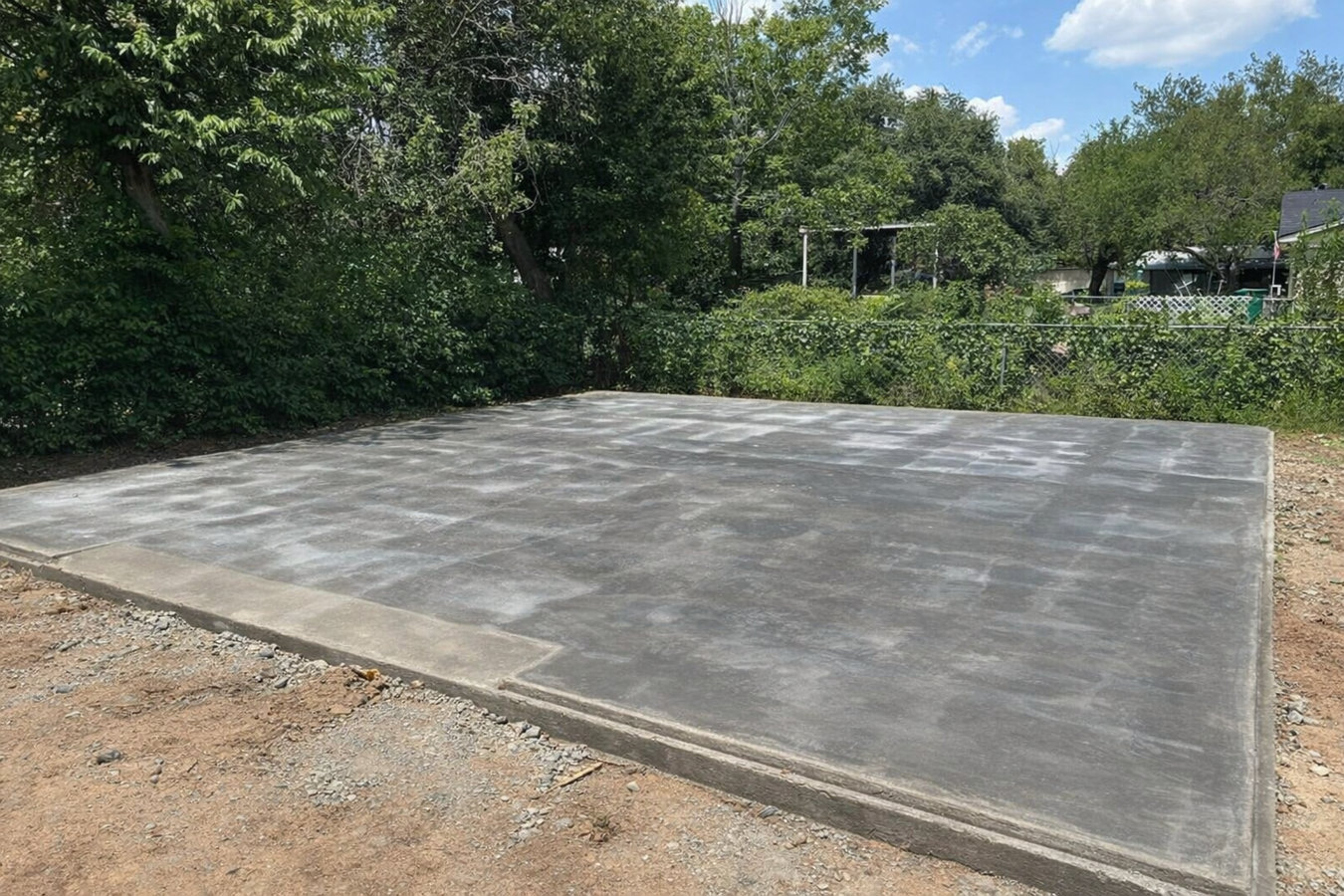
Cracked floors, shifting walls, or a bare lot that needs a solid base before you build? A properly poured slab is the starting point that determines how everything above it performs for decades.
Slab foundation building in Brockton, MA involves grading the site, laying a compacted gravel base, installing a moisture barrier, embedding steel reinforcement, and pouring and finishing the concrete to a uniform thickness - most residential slabs take two to three days to pour and finish, with a full project timeline of four to six weeks once permits and curing are factored in.
Most homeowners who contact us for slab foundation building in Brockton are either replacing a deteriorating original foundation on an older home, adding a garage or accessory structure that needs a proper base, or starting a new build on a vacant lot. Each situation is different, and the site conditions on your specific property - how well it drains, how accessible it is, and what the existing soil looks like - are the biggest factors in what the job will cost and how long it will take.
If your project also calls for a full-depth basement or poured foundation walls, our foundation installation service covers that scope and can be quoted alongside a slab to help you compare options.
If you have patched cracks in your interior walls or floors more than once and they keep coming back, the foundation underneath may be shifting or settling. In Brockton, where the ground goes through a hard freeze-thaw cycle every winter, this kind of movement is common in older homes with foundations that were not built to handle it. A crack that returns after patching is your home's way of telling you the underlying problem has not been fixed.
When a foundation shifts, the frame of the house shifts with it, and the first place you usually notice that is in doors and windows that suddenly stick, drag, or no longer latch. This is especially worth paying attention to if the problem appeared gradually over one or two winters, which is the pattern you would expect from freeze-thaw movement in this climate. It does not always mean you need a full replacement, but it is a clear signal to have someone take a look.
Walk around the outside of your home and look where the foundation meets the walls above it. If you can see daylight, feel a draft, or notice the wall pulling away from the foundation, that is a serious sign the foundation is no longer doing its job. In Brockton's older housing stock, this kind of separation is sometimes found in homes where the original foundation material has since deteriorated.
If you have a slab floor that feels damp, shows white chalky deposits, or has areas where water pools after rain, the moisture barrier beneath may have failed or was never installed properly. This is a common finding in Brockton homes built before modern moisture control practices were standard. Left unaddressed, persistent moisture can damage flooring, encourage mold growth, and weaken the concrete over time.
The most common request we handle is a new slab-on-grade pour for a garage, addition, or accessory structure. These projects start with excavation, followed by gravel compaction, moisture barrier installation, rebar or wire mesh placement, and a finished pour that is level across the entire surface. For garages and detached structures, the thickened edge beams that form the perimeter are built into the same pour so there are no weak joints at the base of the walls.
Foundation replacement on older Brockton homes is more involved. The house needs to be temporarily supported while the deteriorated original foundation is removed and the new slab is formed and poured. This type of project requires experience with older structural systems and knowledge of how Brockton's housing stock was originally built. If your home is a two- or three-family built before 1960 and you are seeing signs of foundation movement, this is worth discussing with a contractor who has done this specific work in this area. Our foundation installation service covers the full scope of new basement and crawl space foundations if your project requires depth rather than a flat slab.
For homeowners adding a detached structure that also needs utilities roughed in below the slab, we coordinate the concrete work around the utility trenches so everything is completed before the pour day. This avoids costly cutting of a finished slab later. Our concrete footings service handles individual or continuous footings if your project calls for isolated load points rather than a full slab.
Best for garages, additions, and new detached structures that need a flat, level base built from scratch.
Used on older Brockton homes where the original foundation has deteriorated and needs to be removed and repoured.
For projects where plumbing, electrical conduit, or HVAC lines need to be roughed in below the concrete before the pour.
The standard choice for garage and accessory structure slabs, with integral footings cast in a single pour to eliminate joints.
Brockton sits in a freeze-thaw climate that puts real stress on any concrete poured without the right prep. The ground here regularly freezes and thaws throughout the winter, and each cycle causes the soil to move slightly. A slab poured on a poorly compacted or poorly drained base will begin to show that movement within a few years, first as hairline cracks, then as uneven sections, then as structural problems that are far more expensive to fix than they would have been to prevent. The gravel base and moisture barrier are not optional steps here - they are what separates a slab that lasts from one that does not.
The soil in many parts of Brockton, particularly in the Campello and Montello neighborhoods and on properties closer to downtown, has clay content that holds water rather than draining it. Clay soils expand when wet and contract when dry, and that movement translates directly into slab stress. For projects in these areas, we often specify a thicker gravel section or additional drainage work to account for what the soil is actually going to do after the pour.
We work regularly across the Brockton area and serve surrounding communities including Quincy, Newton, and Providence. Wherever the project is, the same prep standards apply.
We visit your property to assess the site, measure the footprint, evaluate drainage and access, and discuss whether you are building new or replacing an existing foundation. You will receive a written estimate covering excavation, gravel base, moisture barrier, reinforcement, the pour, and permit fees. We reply within one business day of your first contact.
We apply for the City of Brockton building permit on your behalf before any work begins. Permit approval typically takes one to two weeks. This is not optional, and a city inspector will verify the finished slab - giving you a documented record that the foundation was built correctly.
Before the pour, the crew excavates to the correct depth, grades the area flat, and lays down a compacted gravel base followed by a plastic moisture barrier. This prep typically takes one day. You will need to keep the work area clear of vehicles, stored items, and anything else that blocks access.
Concrete trucks arrive, the slab is placed, reinforced with steel, and finished in one continuous process, typically four to eight hours. The slab is walkable within 24 to 48 hours, but the full cure takes about 28 days. A building inspector visits to confirm the work meets code before any framing or construction begins on top.
We visit your site in person, assess the soil and access, and give you a price that covers everything before work begins. No surprises.
(508) 639-3270Brockton's clay soils hold water, and ground moisture wicking up through an unprotected slab is a common cause of damp floors and deteriorating finishes. We install a poly moisture barrier on every job as a standard step, not an upgrade. It is the kind of prep work that you will never see - but you will notice if it was skipped.
Brockton's winters regularly drop below freezing, and concrete poured in cold conditions without the right precautions cures unevenly and loses strength. When a client's timeline requires a cold-weather pour, we use insulating blankets and adjusted mixes to protect the slab. See the Portland Cement Association's cold-weather concreting guidelines for what proper protection involves.
We handle the City of Brockton permit application and coordinate the required inspection, keeping all city paperwork off your plate. A permitted slab is an asset on your property record. An unpermitted foundation can become a serious problem when you sell, refinance, or file an insurance claim. We do not pour a single yard of concrete until the permit is in order.
We work regularly across 12 service areas including Brockton, Quincy, Providence, and Manchester. Local experience with Plymouth County soil conditions means we price the prep work accurately from the start. Homeowners in Campello and Montello have come to us specifically because we understand what older lots in Brockton actually look like.
Foundation work is the one job on your property where there is no easy way to fix a mistake after the fact. That is why we do not start a pour until the prep work is right, the permit is in hand, and the site conditions have been assessed honestly. The Massachusetts Construction Supervisor License requirement exists precisely to ensure the person overseeing your foundation has met a minimum standard - and it is worth verifying before you sign any contract.
Full-depth basement and crawl space foundations built to Massachusetts frost-line requirements for new homes or major additions.
Learn moreIndividual or continuous footings sized and poured to carry the loads of walls, columns, and structural posts on your property.
Learn moreSpring and summer build windows fill up fast. Contact us today to lock in your start date and get a written estimate before the season books out.