
Loading...
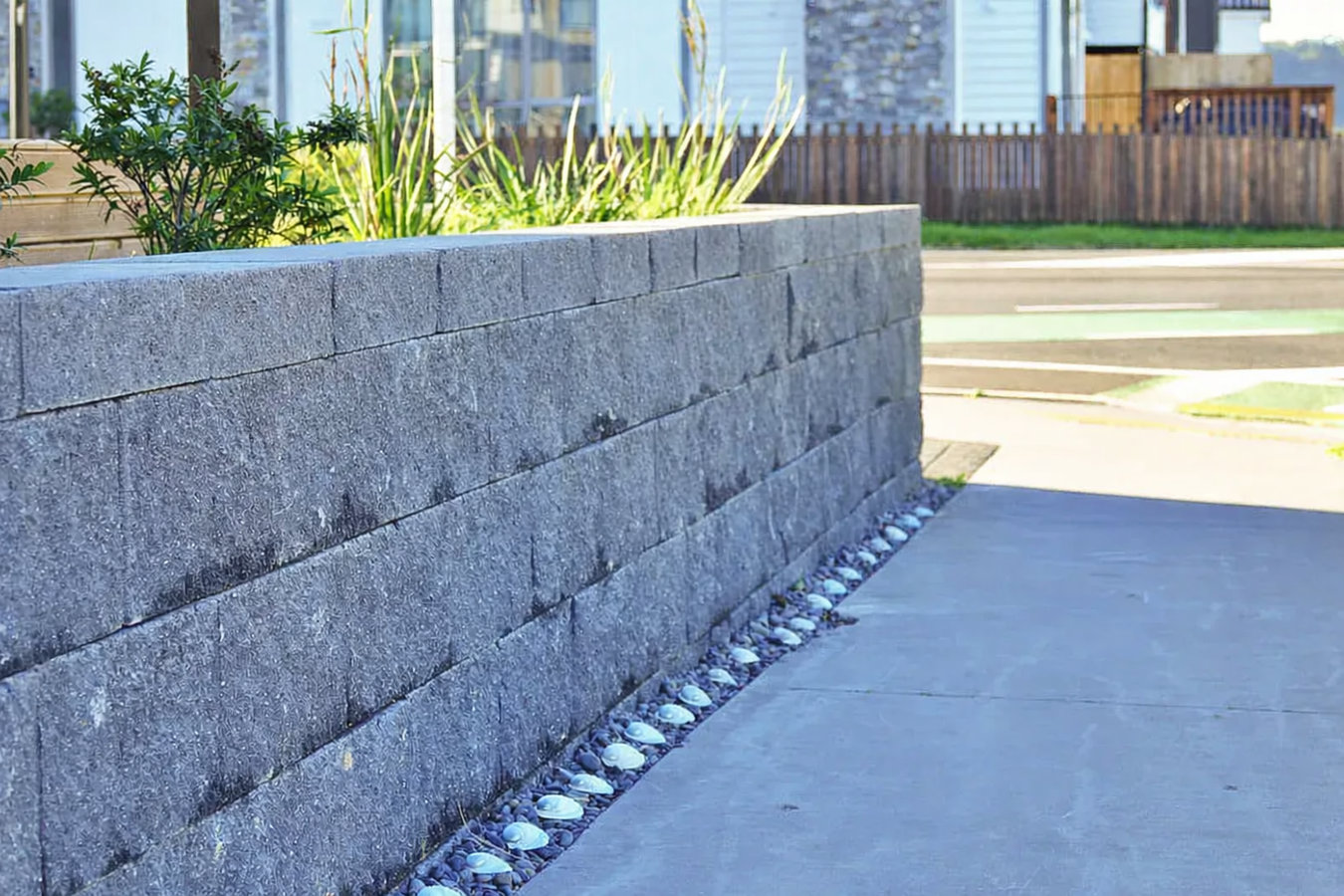
Soil sliding toward your foundation or an aging wall that is starting to lean? A properly built concrete retaining wall solves both problems and creates usable flat space where you had slope.
Concrete retaining walls in Brockton, MA hold back slopes and protect foundations by anchoring a footing below the 48-inch frost line, building the wall, and installing gravel drainage behind it so water pressure never builds up - most residential projects take two to five days from excavation to cleanup.
For Brockton homeowners, a retaining wall project usually starts with one of two problems: soil that is moving toward the foundation after every storm, or an older wall that is visibly leaning and needs to be replaced before it fails completely. Many properties in Brockton have walls built in the 1950s and 1960s that were never designed with proper drainage, and those walls are now showing the consequences. When water has nowhere to go, pressure builds behind the wall until something gives.
If the sloped area around your wall also needs steps or a level surface leading to a garage or basement, our concrete floor installation service can be coordinated as part of the same project.
If you notice soil collecting near your foundation, driveway, or walkway after heavy rain, the ground is not being held in place. Brockton's clay-heavy soils do not absorb water quickly, so runoff and erosion happen fast after a storm. Left alone, this movement can eventually undermine your foundation or damage the concrete on your driveway.
A wall that bows outward, leans forward, or shows wide cracks is under more pressure than it can handle. Many Brockton homes have original walls from the 1950s and 1960s built without proper drainage, and those walls are now reaching the end of their life. A leaning wall will not fix itself; it will continue to shift until it fails.
When soil on a slope has no structure holding it, rainwater runs downhill and collects at the lowest point, which is often right next to your house. If you see standing water near your foundation after storms, a retaining wall combined with proper grading can redirect that water away. Ignoring it risks basement moisture problems and, over time, foundation damage.
If the edge of your driveway or a concrete walkway is cracking, sinking, or separating where it meets a sloped area, the soil underneath may be shifting. This is especially common on Brockton properties where driveways were poured against a hillside without a proper retaining structure. A wall stabilizes the soil so the concrete above it has a solid, stable base.
Poured concrete walls are the most common choice for Brockton residential properties because they can be formed to any shape, handle high soil loads well, and resist the freeze-thaw stress that cracks lighter materials over time. A poured wall is formed on-site, reinforced with rebar, and poured in a single continuous pour, which eliminates the joints that can become weak points in block construction. For most residential applications, this is the most durable long-term option.
Concrete block, sometimes called CMU, is an alternative suited to walls where aesthetics matter as much as function. Block walls can be finished with a cap or texture that gives them a cleaner appearance while still providing the structural performance concrete delivers. They are slightly faster to build, which can reduce labor cost on shorter walls. If you are also considering concrete steps construction alongside the wall, block finishes can be matched to coordinate the overall look.
For yards with significant grade change, tiered walls break the height into multiple shorter walls separated by planting areas or flat gravel sections. This approach distributes the soil load across multiple structures and is typically required when the total height exceeds what a single residential wall can safely handle. Each tier gets its own footing, drainage layer, and backfill.
Best for high-load applications and properties where durability over 50-plus years is the priority.
A good fit when appearance is a factor and the wall height is moderate, typically under six feet.
Used when total grade change is too large for a single wall, breaking the height into two or more shorter structures.
Standard on all our builds, but specified as its own line item for properties with high clay content or known drainage problems.
Brockton sits on glacially deposited soils with significant clay content throughout much of the city. Clay holds water rather than draining it, which means water pressure builds up behind retaining walls much faster here than in areas with sandier soil. A contractor who does not account for this by using more gravel backfill and drainage pipe is building a wall that will fail on Brockton's timeline, not the national average. If you are getting estimates, ask each contractor specifically how they plan to handle drainage before you agree to anything.
Brockton also has a large inventory of homes built in the mid-20th century, and many of those properties have original retaining walls from the same era. Those walls were often built before modern drainage standards were common practice, and they are now 50 to 70 years old. If your home was built before 1980 and has an existing wall, it is worth having it inspected before the next spring thaw puts maximum pressure on it. We see failed older walls every spring in neighborhoods like Campello and Montello after the ground thaws and clay soils become saturated.
We regularly work across Brockton and surrounding communities. Homeowners in Quincy, Newton, and Providence face similar clay-soil and frost-depth conditions and can expect the same deep-footing, properly drained build on every project.
We visit your yard in person, look at the slope and soil, check any existing walls, and discuss what you want the wall to accomplish. You will receive a written quote covering excavation, materials, drainage, and permit fees. We reply within one business day of your inquiry.
If your wall is over four feet tall, we handle the permit application with Brockton's Inspectional Services Division so you never have to call the city yourself. Once the permit is in hand, we confirm your start date and how many days the project will take.
The crew digs down at least 48 inches below grade to set the base below the frost line. This is the noisiest, most disruptive part of the job. Expect machinery in your yard and limited access to the work area for one to two days.
Once the footing is set, the wall goes up and drainage material is installed behind it before backfilling. A city inspector signs off on the finished work. We walk you through the curing timeline and keep the site clean before leaving.
We give you a written estimate with a drainage plan included, handle the permit, and build the wall to the frost-depth standard Massachusetts requires. No surprises.
(508) 639-3270Massachusetts requires wall footings to sit below the frost line, which means at least 48 inches down in Brockton. We never skip this step. A shallow footing costs less to dig but almost always leads to a wall that shifts or tilts within a few winters, turning a completed project back into a problem.
The number-one reason retaining walls fail is water pressure building up behind them. Every estimate we provide includes a specific drainage plan, gravel backfill quantities, and pipe placement. If a competing quote does not mention drainage, ask about it before signing. See the Portland Cement Association's concrete construction guidelines for what proper drainage involves.
We pull the permit, coordinate the Brockton Inspectional Services inspection, and keep the city paperwork off your plate entirely. A permitted wall is an asset on your property record. An unpermitted wall can become a real problem when you sell the home or need to make any kind of insurance claim.
We work regularly in Brockton and surrounding communities including Quincy, Newton, Providence, and beyond. Local experience with southeastern Massachusetts clay soils means we account for drainage and base preparation accurately, not as an afterthought on the day work begins.
Every one of these points shows up in the written estimate before any work starts. You can verify our Massachusetts Construction Supervisor License and Home Improvement Contractor registration through the state registry. Both are required for this type of work and both are current.
Replace a cracked or settling basement or garage slab with a properly prepared concrete floor built for Brockton's freeze-thaw climate.
Learn moreAdd durable concrete steps alongside a retaining wall to connect grade changes safely and complete the look of your yard.
Learn moreBrockton contractors fill their spring schedules fast. Reach out now to lock in your date and get a drainage-inclusive quote in writing before the rush.