
Loading...
NoSweat Brockton Concrete is a licensed concrete contractor serving Manchester, NH with slab foundation building, concrete driveways, steps, and retaining walls built for New Hampshire's deep-freeze winters. We have served Manchester homeowners since 2022, pulling permits from the Manchester Building Department and working on homes from the dense South End and North End neighborhoods to newer subdivisions on the West Side and city outskirts. We respond to every inquiry within 1 business day.
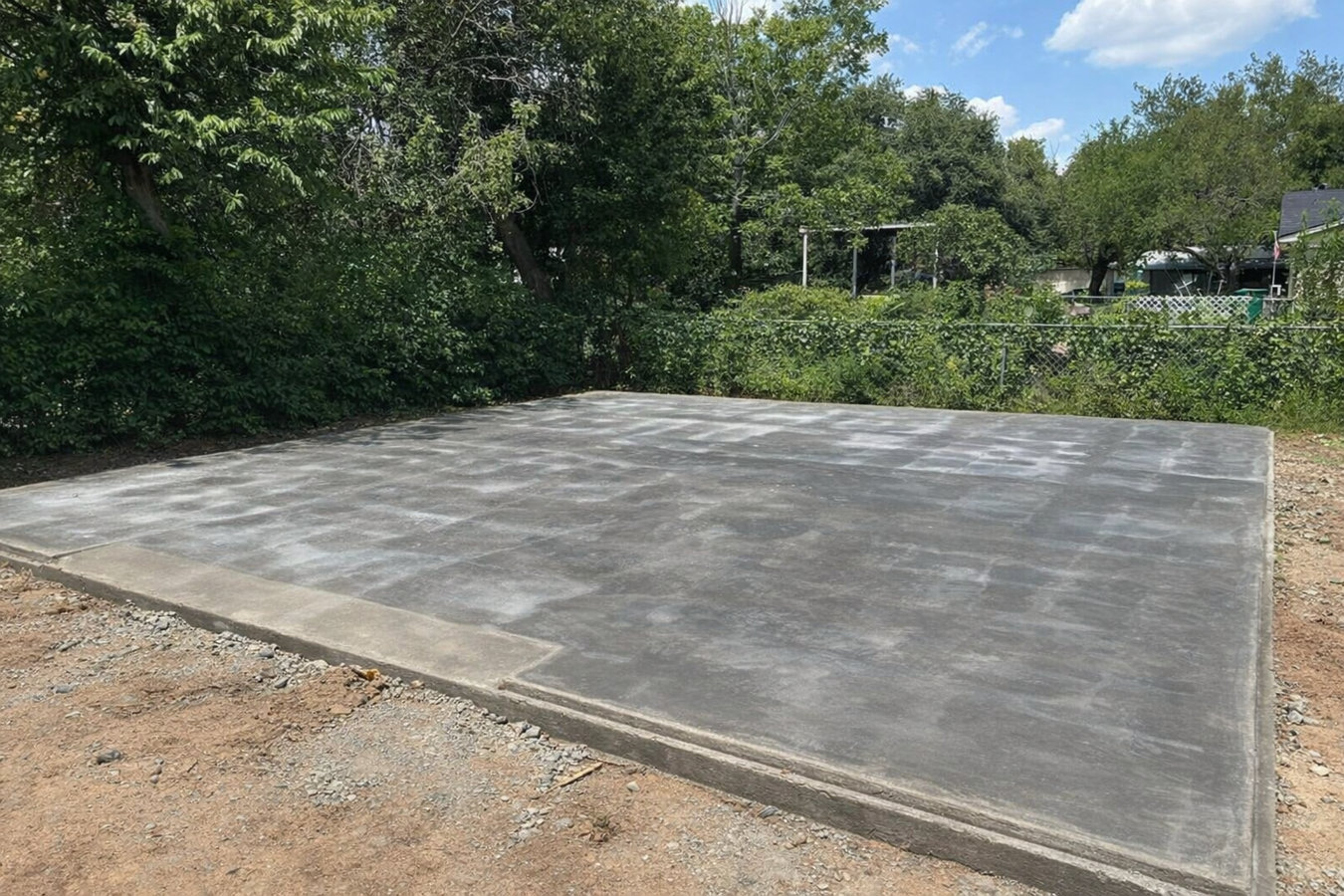
Manchester sits in a climate zone where frost depth can reach 4 feet in a hard winter, and any slab that does not account for that depth will heave and crack within a few seasons. Many older Manchester homes - particularly in the South End and North End where the housing stock dates to the late 1800s - have original foundations reaching the end of their useful life. A properly built replacement slab starts with the right excavation depth, a compacted gravel base, a moisture barrier, and correctly placed reinforcement. Learn more about our slab foundation building service.
Manchester's 60 inches of annual snowfall and repeated late-winter freeze-thaw cycles are the leading cause of driveway failure in the city. Water enters surface cracks, freezes, expands, and widens the crack with every cycle. Homes in the South End and North End often have original driveways on minimal base material - the result is cracking and heaving that patching cannot fix. A properly built replacement with adequate base depth and correctly spaced control joints will outlast the original surface by 30 or more years.
Entry steps on Manchester's pre-1940 homes have typically been in place for 80 or more years and are showing it. The freeze-thaw cycle in southern New Hampshire is particularly hard on entry steps because they are fully exposed to precipitation and temperature swings with no roof protection. Crumbling or heaved steps are a safety risk and a common code enforcement issue across older Manchester neighborhoods. We replace steps to current code dimensions with concrete mixes and base preparation suited for New Hampshire winters.
Manchester's North End and West Side neighborhoods have rolling terrain where grade changes between neighboring properties require proper soil retention. Older block or stone retaining walls on these properties fail under the pressure of frost heave and saturated soil after spring snowmelt along the Merrimack River corridor. Concrete retaining walls with proper drainage behind the face resist the seasonal pressures that destroy older wall systems, particularly in areas prone to spring flooding near the river.
Manchester property owners are responsible for the sidewalk sections fronting their homes, and the city issues notices for heaved or cracked panels that present trip hazards. In the dense South End and North End, where mature tree root systems run close to the surface, sidewalk panels heave regularly - and the issue returns if roots are not properly addressed before replacement panels are poured. We handle the full scope: demolition, root management where needed, base preparation, and the finished pour to current grade.
Homes on the West Side and in Manchester's newer outer neighborhoods typically have more usable yard space than the tight lots closer to downtown, and many homeowners there are ready to upgrade aging wood decks or neglected backyard areas. A concrete patio built on a properly prepared base performs well through New Hampshire winters without the wood rot and fastener failures that plague pressure-treated decks in high-snowfall environments. Stamped and exposed-aggregate finishes add visual interest without adding maintenance.
Manchester is New Hampshire's largest city, with about 115,000 residents spread across a mix of dense urban neighborhoods and newer residential areas on the city's outskirts. A large share of the housing stock in the South End and North End was built to house mill workers in the late 1800s and early 1900s - which means many of the most populated neighborhoods have homes over 100 years old, with original foundations, narrow lots, and limited equipment access. The West Side and outer neighborhoods have newer Colonial and Cape Cod-style homes from the 1970s through 2000s on larger lots, but those properties are now old enough that driveways and slabs are approaching the end of their original lifespan.
Manchester averages around 60 inches of snow per year, and frost depth in southern New Hampshire can reach 4 feet in a hard winter. The National Weather Service Gray-Portland office documents the repeated freeze-thaw cycles that define late winter and early spring in this region. Any concrete work that does not account for frost depth and the pressure of freeze-thaw cycling on saturated soil will fail faster than it should - often within the first few winters. This is not a detail that can be compensated for by higher-quality concrete mix alone; it starts with the base preparation and the depth of the pour.
Manchester also has a higher-than-average share of multi-family housing, particularly in the older neighborhoods near downtown. Two- and three-family homes built for mill workers often have shared foundations, shared driveways, and shared entry systems that affect multiple units at once when they fail. Repairs on multi-family properties require coordination across owners or tenants and typically involve more complex scope than a single-family job. Understanding that Manchester's housing stock is not uniform - that the South End and the West Side present entirely different project profiles - is what separates a contractor who actually knows the city from one who does not.
We pull permits from the Manchester Building Department and work regularly on both the older urban housing near downtown and the newer subdivisions on the West Side and city edge. The difference in working conditions between these two parts of Manchester is significant: South End and North End lots are tight, access for concrete trucks can require a pump rather than a direct chute pour, and the homes themselves are old enough that surprises below grade are common. West Side homes offer more open access but have a different set of issues - original slabs and driveways from the 1970s and 1980s that are reaching the end of their designed lifespan.
Manchester's most recognizable landmarks are the Amoskeag Millyard along the Merrimack River - the converted 19th-century mill buildings that define the city's skyline - and SNHU Arena in the heart of downtown, home to the Manchester Monarchs. Most locals navigate by Elm Street through the downtown core, and by major corridors like Mammoth Road, South Willow Street, and Hooksett Road into the outer neighborhoods. The Merrimack River flood plain runs through the city, and homes in low-lying areas near the river need careful drainage planning on any slab or flatwork.
Manchester sits between two other communities we serve regularly. Lowell, MA to the south shares a similar mill-era housing profile and freeze-thaw climate, so the base preparation standards we apply in Manchester transfer directly to jobs on the Massachusetts side. Our crews move between both cities throughout the working season.
Reach us by phone or through the online form. We respond within 1 business day and schedule a site visit at a time that works for you - no commitment is required before you receive a written estimate.
We visit your Manchester property and assess site access, soil and drainage conditions, demolition scope, frost depth requirements, and any permit considerations specific to your lot. Your written estimate itemizes every line item - demolition, base prep, forms, the pour, finishing, and cleanup - with no surprise additions after you sign.
We file with the Manchester Building Department and coordinate any right-of-way permits required for sidewalk or driveway apron work. No excavation begins before permits are in hand. Required inspections are coordinated as part of the job - you do not need to manage this yourself.
The crew demolishes the existing surface if needed, prepares the base to the correct depth for Manchester frost conditions, pours and finishes the concrete, and clears the site each working day. We walk you through curing requirements before leaving, including vehicle restrictions and winter sealing recommendations appropriate to New Hampshire's climate.
We serve homeowners throughout Manchester's neighborhoods - from the tight streets of the South End and North End to the newer subdivisions on the West Side and city outskirts. Call us or fill out the form and we will respond within 1 business day with a free, written estimate.
(508) 639-3270Manchester is New Hampshire's largest city, with about 115,000 residents along the Merrimack River in the southern part of the state, roughly 50 miles north of Boston. The city grew up around the Amoskeag Manufacturing Company, once one of the largest textile mill complexes in the world. The mills closed in 1936, but the dense worker neighborhoods they built - the South End, the North End, and Rimmon Heights - still define the city's older core. Homes in these neighborhoods were built between the 1880s and 1930s, many of them two- and three-family buildings on tight urban lots with minimal setback from the street.
The West Side and neighborhoods farther from downtown have a completely different character: Colonial and Cape Cod-style homes from the 1970s through 2000s on larger lots with attached garages and paved driveways. About 45 percent of Manchester's housing units are renter-occupied, with ownership skewing toward the outer neighborhoods. Downtown Manchester centers on Elm Street, and SNHU Arena near the city center is the main event venue in the state. The Merrimack River corridor through the city includes the historic Millyard, now converted to offices, restaurants, and apartments, and Amoskeag Falls - one of the most recognizable natural features in the city.
Manchester serves as a regional hub for Hillsborough County, and many residents commute to Nashua or Boston for work. We also serve homeowners in neighboring Nashua, New Hampshire's second-largest city to the south, where the housing stock has its own distinct mix of mill-era downtown properties and newer North End colonials on larger suburban lots.
Durable concrete driveways designed to withstand New England winters and heavy daily use.
Learn moreCustom concrete patios that extend your living space and hold up year after year.
Learn moreDecorative stamped concrete that adds texture and style to any outdoor surface.
Learn moreSafe, level concrete sidewalks for residential and commercial properties.
Learn moreSmooth, reinforced concrete garage floors built to handle vehicles and heavy loads.
Learn moreStained, polished, and textured concrete finishes that elevate any surface.
Learn moreStructural concrete retaining walls that prevent erosion and define your landscape.
Learn moreInterior concrete floor installations for basements, workshops, and commercial spaces.
Learn moreSlip-resistant concrete pool decks that are comfortable underfoot and easy to maintain.
Learn moreSolid concrete steps built to code with clean edges and lasting curb appeal.
Learn moreProperly reinforced concrete slab foundations for new construction and additions.
Learn moreFull foundation installations from excavation to pour, done right the first time.
Learn moreCommercial-grade concrete parking lots built for high traffic and long service life.
Learn moreLoad-bearing concrete footings that provide a stable base for any structure.
Learn morePrecision foundation raising to level settled structures and restore structural integrity.
Learn moreClean, accurate concrete cutting for repairs, utilities, and renovation work.
Learn moreServing these cities and communities.
We serve Manchester homeowners from the South End and North End to the West Side and surrounding New Hampshire communities. Call (508) 639-3270 or send us a message and we will respond within 1 business day.