
Loading...
Wet basement every spring, cracking walls, or starting a new build? A properly installed foundation with the right depth and waterproofing fixes the problem for the next 80 years.
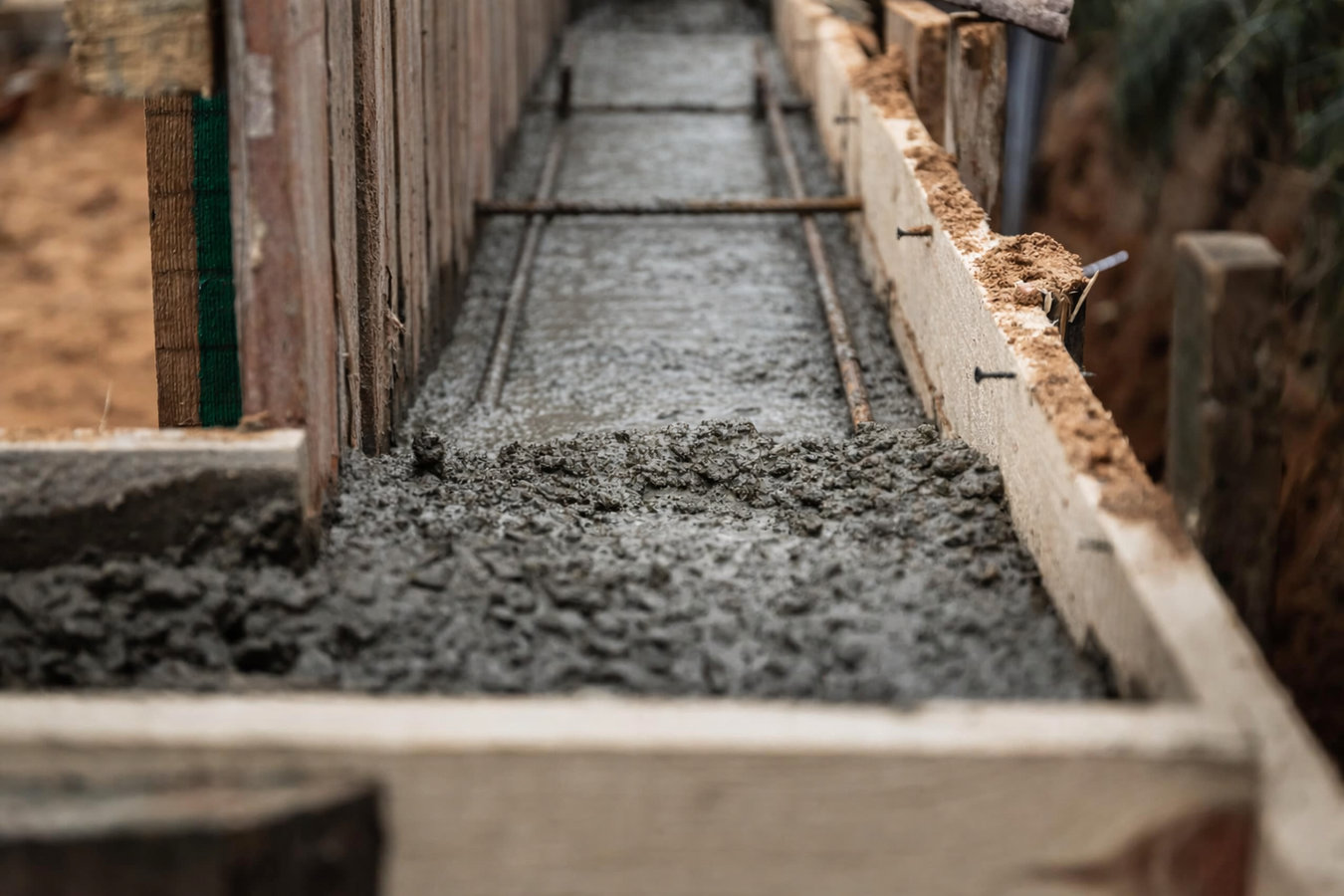
Foundation installation in Brockton, MA starts with excavation to at least four feet below grade to clear the frost line, followed by forming and pouring the concrete walls or slab, applying exterior waterproofing, installing perimeter drainage, and backfilling - most projects take one to three weeks from excavation to the point where framing can begin, with permitting adding another one to two weeks before the first shovel goes in.
The most common foundation projects we handle in Brockton fall into two categories: new installations for homes being built or significantly expanded, and replacement projects on older homes where the original foundation has reached the end of its useful life. Brockton has a large share of homes built between the 1890s and 1950s - many of them sitting on original stone, brick, or early concrete foundations that were never designed to last this long. When those foundations start failing, the symptoms show up inside the house first: sticking doors, diagonal cracks, water on the basement floor.
For projects that call for a flat slab rather than a full basement or crawl space, our slab foundation building service covers that scope and can be quoted alongside a full foundation to help you understand the options and trade-offs.
Diagonal cracks - especially ones wider at one end - are a sign your foundation may be shifting or settling unevenly. In Brockton's older housing stock, this is a common early warning sign that the original foundation is no longer doing its job. If you see cracks like this appearing or growing, it is worth having a foundation contractor take a look before the problem gets worse.
When a foundation moves, the frame of your house moves with it, and that often shows up first in doors and windows that suddenly do not open or close the way they used to. This is especially common in Brockton homes after a hard winter, when freeze-thaw cycles put stress on older foundations. If multiple doors or windows started sticking around the same time, that pattern is worth investigating.
If you find puddles or damp patches on your basement floor in March or April, water is finding its way through or under your foundation. Brockton's seasonal groundwater rise makes this a recurring problem for homes with aging or improperly waterproofed foundations. A wet basement once is a nuisance; a wet basement every spring is a structural concern that will not improve on its own.
Stand in your basement and look at the walls. They should be flat and straight. If a wall looks like it is curving inward, even slightly, that means soil pressure from outside is pushing against it. This is a serious sign that the wall may be failing and needs professional attention soon. Clay-heavy soils common in parts of Brockton hold water and generate significant lateral pressure after wet seasons.
Full basement foundations are the most common type in older Brockton homes, and for good reason - they provide full-height usable space below the home while keeping the structure elevated above grade. A new full basement starts with excavating down six to eight feet or more, setting forms to create poured concrete walls, and waterproofing the exterior before backfilling. The footings must be set at least four feet below grade to clear the frost line, which means excavation in Brockton is always deeper than it would be in a warmer region. Any foundation that is replacing an existing basement on an older home requires temporary support of the structure above while the old foundation is removed and the new one is formed and poured.
Crawl space foundations sit lower than a full basement and provide access to utilities below the home without a full underground level. They are often the right choice when site conditions make deep excavation impractical or when the project budget does not support a full basement. Crawl space foundations still require proper waterproofing and ventilation to prevent the moisture problems that are common in Brockton's wet springs. For projects where a basement or crawl space is more than you need, our slab foundation building service handles flat on-grade pours for garages and additions. If your project also involves a significant parking or paving surface adjacent to the foundation, our concrete parking lot building service can be coordinated to keep everything on one schedule.
Foundation replacement on older Brockton homes is its own category of work. The building must be temporarily braced and supported at the floor level while the crew removes the original foundation, preps the site, forms the new walls, and pours. This is more disruptive and more expensive than new construction, and it requires a contractor with specific experience doing this type of work - not just one who has poured foundations for new builds.
Best for new home construction or additions where full-height underground space is needed for utilities or storage.
A good fit when site conditions make deep excavation difficult and full basement depth is not required.
Used on older Brockton homes where the original stone, brick, or early concrete foundation has reached end of life.
The starting point for any new home or large addition, including excavation, forming, pouring, waterproofing, and inspection.
Brockton sits in a part of Massachusetts where the ground freezes hard every winter and the soil in many neighborhoods has significant clay content. Clay soil holds water and expands when wet, which creates lateral pressure against foundation walls - pressure that builds slowly over years and can eventually cause bowing or cracking in walls that were not designed with adequate drainage. This is why every foundation we install includes perimeter drainage as a standard feature, not an optional add-on. The South Shore also sees substantial spring snowmelt that raises the water table seasonally, making exterior waterproofing a genuine necessity rather than a precaution.
Much of Brockton's housing stock was built before modern frost-depth requirements were standard practice, which means a significant number of original foundations in neighborhoods like Campello and Montello were simply not poured deep enough. Homes built in these neighborhoods during the early 1900s often have foundations that were set two to three feet below grade rather than the required four. Every winter that passes puts more stress on those foundations, and by the time visible symptoms appear - sticking doors, diagonal cracks, bowing walls - the underlying movement has often been building for years.
We work across the Brockton area and serve surrounding communities including Worcester, Quincy, and Providence. The same frost-depth and drainage standards apply on every job.
We visit your property, assess the soil and drainage conditions, review any existing foundation, and take measurements. No contractor should quote a firm price over the phone without seeing your site. You will receive a written estimate covering excavation, forming, waterproofing, drainage, and permit fees. We reply within one business day of your first contact.
We apply for the Brockton Building Department permit before a single shovel enters the ground. Approval typically takes a few business days to two weeks depending on current workload. You should ask to see the permit before work begins - any contractor who resists showing it is a contractor worth walking away from.
Once the permit is in hand, the crew excavates to the required depth - at least four feet below grade to get below Brockton's frost line. Forms are set to hold the concrete walls at consistent thickness and plumb. A building inspector visits at key stages before the concrete is poured and covered.
The concrete is poured, cured, and then the exterior walls are waterproofed and drainage material is installed around the perimeter before backfilling. A final inspection confirms the work meets permit requirements. We walk you through the completed foundation before leaving the site and leave the area clean.
We visit your property, assess the soil and drainage, and give you a written quote covering every line item before any work begins. No phone guesses.
(508) 639-3270Massachusetts requires footings to go down roughly four feet to get below the frost line in the Brockton area. A contractor who cuts this depth to save excavation time is building a foundation that will shift and crack the first time the ground freezes hard. We set footings to the required depth on every project, not as an option.
The South Shore gets significant snowmelt and spring rainfall, and foundations without proper exterior waterproofing pay for it every March and April. We treat waterproofing as a core line item in every estimate, not an upsell. See the National Association of Home Builders guidance on what foundation waterproofing should include.
We pull the permit through the Brockton Building Department, coordinate inspections at each required stage, and deliver a clean permit record when the work is done. That record protects you at closing, during refinancing, and when a buyer's inspector shows up. We have worked with the Brockton Building Department on enough projects to know exactly what they look for.
We work regularly across 12 communities including Brockton, Quincy, Worcester, and Providence. Every foundation we install in any of these areas is built to the same depth and drainage standards. Homeowners in neighborhoods like Campello and Montello have specifically mentioned that other contractors quoted them without visiting the site first - we do not do that.
Foundation work is the one project on your property where the consequences of cutting corners do not show up for years - but when they do, they are expensive. The Massachusetts Home Improvement Contractor registration gives homeowners access to the state arbitration program if a dispute arises - it is worth confirming any contractor you hire is registered before you sign anything. We pull every permit, pass every inspection, and do not leave a site until the work is documented correctly.
Commercial and residential concrete parking surfaces built with proper base preparation and drainage for long-term durability.
Learn moreFlat slab-on-grade foundations for garages, additions, and accessory structures poured with gravel base and moisture barrier.
Learn morePermit season and summer build windows fill quickly. Reach out today to get on the schedule and receive a written estimate before the best weather windows are gone.