
Loading...
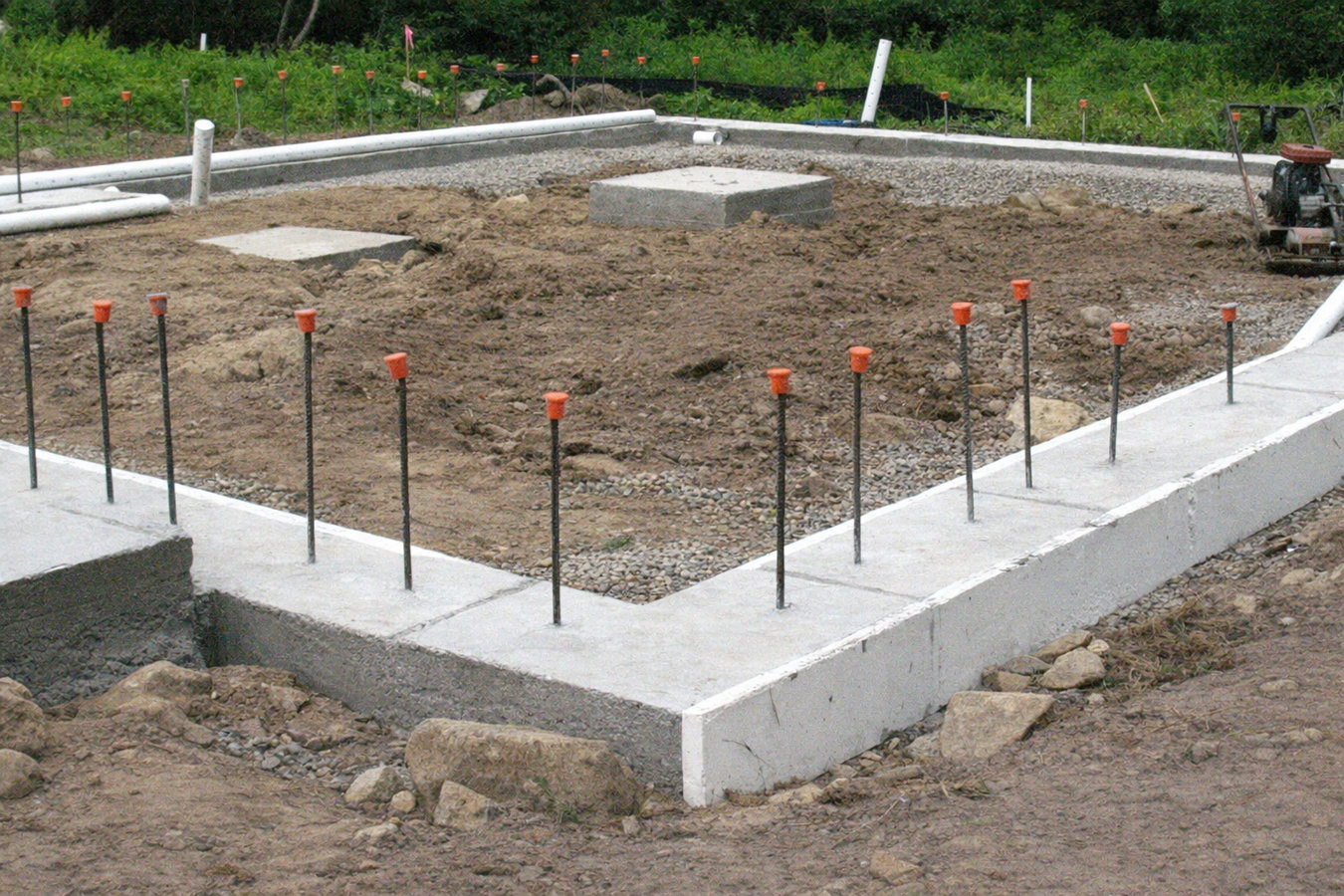
A deck that tilts or a porch pulling away from the house is almost always a footing problem. Properly dug and poured footings below the frost line give your structure a base that New England winters cannot move.
Concrete footings in Brockton, MA are the wide, buried concrete pads that support structures above them - decks, additions, porches, and detached garages - and they must be dug at least 48 inches below grade to get below Massachusetts' frost line; most residential footing projects take one to two days of work, with curing adding three to seven days before framing can begin on top.
The frost line is the critical number in Brockton. When soil freezes in winter, it expands and pushes upward. A footing that sits above the frost line will be pushed and pulled by that movement every year until it shifts enough to crack the structure it supports. Four feet down keeps the bottom of the footing in soil that never freezes, no matter how hard the winter gets. Brockton inspectors enforce this depth requirement strictly - and for good reason.
For larger structural work that involves a full basement or slab rather than individual footings, our foundation installation service covers that scope and can be quoted alongside individual footings to help you understand the full range of options.
If one corner of your deck sits lower than the others, or a gap is opening between your porch and the house wall, the footings underneath may have shifted. In Brockton, this often happens after a hard winter when freeze-thaw cycles push shallow footings up and down repeatedly. A tilting deck is not a cosmetic issue - it is a safety concern and should be evaluated before the next season of use.
When footings settle unevenly, the structure above them moves too, and the first sign is usually doors and windows that are no longer square. If a door that used to close easily now drags, or if diagonal cracks run from window corners near an addition, the footings supporting that part of the structure may be failing. Multiple doors sticking at once after a hard winter is a pattern worth investigating.
Any new structure attached to your home - a deck, a sunroom, a detached garage - requires proper footings before construction can begin. In Brockton, this means pulling a permit and having the footings inspected before the concrete is poured. If a contractor offers to skip this step to move faster, that is a red flag. The inspection exists to protect your investment.
Walk around the outside of your home and look at the very base of the foundation walls. Cracking, flaking, or crumbling at that base can mean the footings below are deteriorating. Brockton's older homes - many built before modern concrete standards - are particularly prone to this. A horizontal crack running along the base of a foundation wall is especially worth having evaluated quickly.
New footings for decks and additions are the most common work we do in this category. Whether you are adding a deck to a Brockton home, enclosing a porch, or building a detached garage, we dig to the required frost depth, place rebar in every hole before the concrete goes in, and coordinate the city inspection so the pour happens only after an inspector has signed off. The American Concrete Institute publishes authoritative guidance on structural concrete and curing at concrete.org.
Supplemental footings are a common need on Brockton's older housing stock. Many homes built in the early-to-mid 20th century have original footings that were poured to standards far below what is required today - shallower, smaller, sometimes with materials that have since deteriorated. When adding a second story or a heavy addition to an older Brockton home, the existing footings may need to be augmented or replaced alongside the new work. Our foundation raising service covers situations where the structure above needs to be temporarily lifted to allow footing work below it.
Site lighting poles, signage footings, and bollard bases for parking areas are also within our scope. These smaller structural pours use the same frost-depth and rebar standards as residential footings, since the same freeze-thaw forces apply to any anchored structure in Brockton's climate.
Suits homeowners adding or replacing a deck, porch, or covered outdoor structure that needs code-compliant frost-depth footings and a city permit.
Suits homeowners building a sunroom, attached garage, or other addition where new footings are required before any framing can begin.
Suits owners of older Brockton homes where original footings are undersized or deteriorating and need to be augmented or replaced before new structural work.
Brockton's climate drives most of the complexity in footing work here. The city averages roughly 20 or more freeze-thaw cycles per year - days when temperatures swing above and below freezing. Each cycle puts stress on the soil around a footing and on the footing itself. Footings poured too shallow or with a weak mix tend to show damage faster here than in milder climates. The 48-inch frost-depth requirement is not a conservative over-specification; it is the minimum that actually works in a Brockton winter.
Brockton's soil adds another layer of complexity. Much of southeastern Massachusetts sits on glacial till - a mix of clay, sand, gravel, and boulders deposited by retreating glaciers thousands of years ago. This soil is notoriously inconsistent: one dig goes smoothly and the next hits a buried boulder two feet down. It is a more common situation in Brockton than many homeowners expect, and any honest contractor here should acknowledge it upfront and discuss how contingencies are handled before the first bid is signed.
We install footings regularly across communities with similar conditions, including Quincy, Lowell, and Manchester, NH. The frost-depth and glacial-soil conditions across these communities are similar enough that we apply the same excavation and rebar standards everywhere.
We ask a few basic questions - what you are building and roughly where - then schedule a free site visit before giving you a firm price. Footing costs depend heavily on what is underground, and no honest contractor quotes a firm number without seeing the property. You will hear back within one business day of your first contact.
We apply for the required Brockton Inspectional Services permit before a single hole is dug. Approval typically takes a few business days to two weeks. Ask to see the permit before work begins - a contractor who resists showing it is one worth walking away from. We also notify Dig Safe at least three business days before digging, as required by state law.
We dig to at least 48 inches below grade to get below Brockton's frost line, then place steel reinforcing bars in each hole. At this point, the Brockton building inspector visits to confirm depth and placement before any concrete goes in. This inspection is your independent confirmation that the work is correct before it is buried forever.
Once the inspector signs off, we pour the concrete, level the tops, and protect the fresh material if temperatures are expected to drop overnight. Most framing can begin three to seven days after the pour. We walk you through the completed footings and let you know when they are ready for the next phase of your project.
We visit your site, assess the soil, and give you a written estimate with clear contingency terms. No surprises, no pressure - just a straight answer about what your project actually needs.
(508) 639-3270Massachusetts requires footings to reach at least four feet below grade in the Brockton area to stay below the frost line. We dig to the required depth on every job - not just the ones where an inspector is watching closely. A footing poured too shallow will shift the first hard winter, and there is no fixing that without tearing out the structure above it.
We pull the permit through the city's Inspectional Services Division, coordinate the pre-pour inspection, and deliver the permit record when the work is complete. That record matters when you sell your home, refinance, or a buyer's inspector shows up. See the Dig Safe and Massachusetts building code requirements we follow on every dig.
Brockton sits on glacial till - a soil type that can hide buried boulders a few feet down. We talk through what happens if we hit ledge before we start, and our quotes are clear about how contingencies are handled. You will not get a surprise call mid-dig asking for significantly more money with no context.
We install footings across 12 communities from Brockton to Worcester and Providence, including neighborhoods like Campello and Montello. Every footing we pour in any of these areas is built to the same depth and rebar standard - not adjusted down to save time on a particular job. Homeowners who called us after a previous contractor had quoted without visiting the site are a common story for us.
Footings are buried the moment the project is done, which makes it easy for a contractor to cut corners without anyone knowing until a deck starts to tilt three winters later. The homeowners who call us specifically mention that they wanted a contractor who would handle the permit and inspection as a given, not as an upsell. That is the only way we work.
Lifting and releveling existing structures whose original footings have shifted or settled over years of freeze-thaw cycling.
Learn moreFull foundation pours for new construction or replacement of original stone and brick foundations on older Brockton homes.
Learn moreContact us now to lock in your start date - deck and addition projects booked in late winter or early spring have the most scheduling flexibility and the best weather window.